About Mini Greenhouse Kits
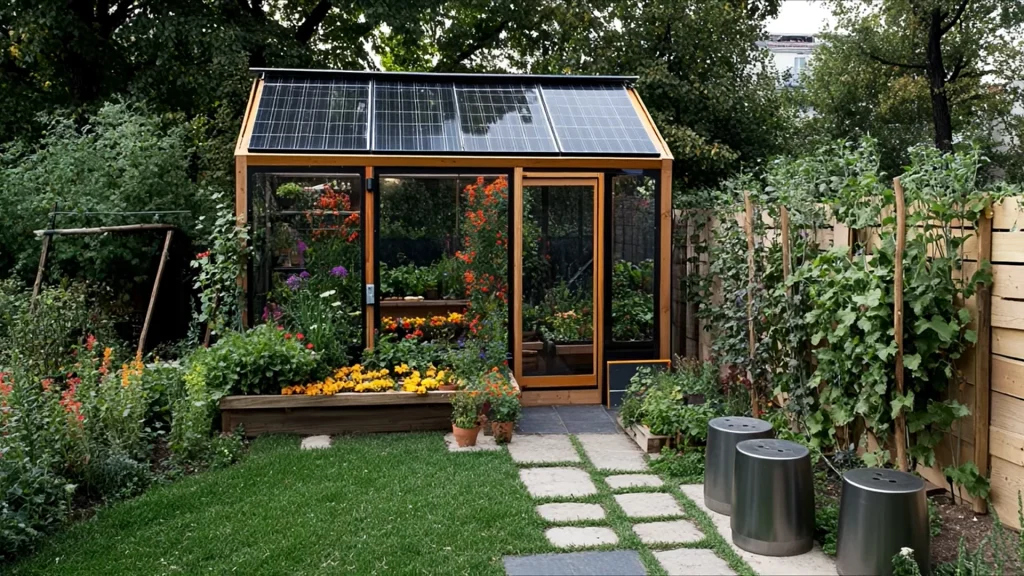
The frustration often precedes the kit for many home gardeners. Non-sprouting seeds. A late frost destroys two weeks of careful nursing. There are trays of seedlings on every windowsill, but their yields are dwindling. The best setups are easy to envision, but difficult to implement. As a result, the kit comes in a flat box that promises something close to control.
We merely share our opinions about greenhouses, gardening, and plants on minigreenhousekits.com in an effort to help people who are standing in front of a seed rack and unsure of where to start. Mini greenhouse kits play a unique and underappreciated role in home gardening. Commercial buildings aren’t intended for them. As learning environments, they allow growers to observe how temperature, light, humidity, and airflow interact in a way that open beds and windowsills simply cannot. Different outcomes are achieved. The accumulation of knowledge tends to be gradual.
In the early spring, you’re likely to see one strolling through a neighborhood. Small, tiered frames covered in translucent polyethylene are tucked up against a south-facing wall. Consider a walk-in model with a zipper door taking up a corner of your patio. The air inside always appears warmer from a distance. Rows of tomato seedlings. Medicinal plants. Here are a few pepper plants that are hopeful. There is a genuine belief that this year will be different. Establishing a greenhouse, no matter how small, implies hope for the future. It’s a silent act of preparation and patience.
Choosing the right equipment, however, isn’t as straightforward as it seems. There is a surprising intimacy to the question of size. Those who experiment with herbs or plant a few annual seeds every spring would benefit from a tabletop model. Walking into a larger walk-in version feels like committing to space, attention, and a particular routine. Most first-time buyers underestimate how quickly they will outgrow their first purchase. An additional tray is included. One more. It doesn’t take long for the shelves to fill up by February.
In product listings, materials are not always clearly stated. Despite lightweight PE plastic covers being inexpensive and easy to assemble, a strong wind on a March night could cause a grower’s frame to collapse by morning. Although polycarbonate panels provide real insulation and significantly greater durability, they are significantly more expensive. Beyond price, there is a real trade-off here. It depends on how much assurance the structure must offer and how much effort the gardener is willing to put in to compensate.
Ventilation is probably the most underappreciated factor. A sealed plastic greenhouse may seem insignificant until the first sweltering spring afternoon changes it into something that resembles a convection oven. Every day, experienced growers open a flap or place a vent, checking the forecast, modifying the coverage, and keeping an eye out for warning signs. Considering how quickly overheating can ruin weeks of meticulous work, it’s unclear why more kit manufacturers don’t include this information.
Watering adds another dimension. Gardeners who use a watering can, daily monitoring, and pressing their fingers into the ground to check for moisture keep things simple. Many others switch to drip irrigation after a few missed mornings and a tray of dried-out seedlings. There is an honesty to that adaptation. Life doesn’t always allow for the rhythm that a garden demands. Automation is not a sign of laziness here. This is a recognition of the reality of the situation.
The discussion is further advanced by heating and lighting. The natural light from a plastic cover is frequently insufficient for anyone starting seeds in January or February. The addition of LED grow lights suspended above the plants and hum subtly becomes essential. A thermostatically controlled heater makes the difference between seedlings that thrive and those that require a restart in March. In many cases, buyers don’t consider these additions until after the kit is assembled and the first chilly night has passed.
Despite this, mini greenhouse kits remain popular. The experience of entering one, even if it requires opening a plastic flap, is fleeting and unique. There is a heavier and warmer air. There is a stronger scent of green growth and moist soil. Progress is rarely apparent in an open garden. A seedling that was barely visible two days ago has pushed out a second set of leaves. You can’t duplicate that immediacy anywhere else.
Furthermore, the enterprise as a whole exudes a subtle optimism. A greenhouse built in February is a bet on April. Plant seeds that will grow into flowers or food. A constant focus over several weeks could bring erratic weather and conflicting demands. A certain amount of forward-thinking faith in one’s own follow-through is required, which, to be honest, doesn’t always work. Common and well-documented mistakes include overwatering, overheating, inadequate airflow, and neglecting ventilation. Each has a lesson that no instruction manual can adequately convey in advance.
The structure of a small greenhouse becomes essentially irrelevant over the course of a season when observed over time. What people really want is what it enables, such as earlier transplants, healthier seedlings, and a closer connection to the rhythms of growing. The solution isn’t ideal. When green shoots emerge where bare soil was three weeks ago, it feels like one on a chilly morning.
Mini Greenhouses Supplies, Accessories and Equipment That Actually Make a Difference
| Category | Details |
|---|---|
| Topic | Mini Greenhouses Supplies, Accessories and Equipment |
| Purpose | Supporting plant growth in controlled environments |
| Common Supplies | Ventilation systems, grow lights, watering kits, heaters |
| Typical Users | Home gardeners, hobby growers, urban farmers |
| Skill Level | Beginner to advanced |
| Maintenance Need | Daily to weekly monitoring |
| Popular Equipment | LED grow lights, drip irrigation, thermal heaters |
| Cost Range | $20 – $300+ depending on setup |
| Key Benefit | Improved plant survival and growth control |
| Reference Website | https://www.rhs.org.uk |
- How to Stop Pigeons From Destroying Your Brassicas Before the Season Even Starts

- How to Read Your Weeds: What the Plants Growing Uninvited Say About Your Soil
- What to Do With a Dead Tree in Your Garden: The Answer Might Surprise You
- Why Children Who Garden Eat More Vegetables – and What the Research Actually Shows
- Why the Leaf Mould Method Is the Secret Your Garden Has Been Starving For
- Grow a Three-Season Potager That Looks as Good as It Tastes – Even If You’ve Never Heard the Word Before
- Why the Most Beautiful Gardens in the World All Share This One Structural Principle
- The Companion Planting Combinations That Pest-Proof Your Vegetable Garden
- Is It Worth Growing Your Own Potatoes? We Did the Math – And the Answer Might Surprise You
- Hardy Perennials That Laugh at Drought, Neglect, and Everything in Between
- These 8 Flowers Bloom From June Through October – Plant Them Once and Enjoy Them All Season
- The Most Aggressive Spreaders in the Plant World – and How to Keep Them in Check
- What Happened When I Added Wood Ash to My Garden Beds for an Entire Year
- Is Gardening the Best Form of Exercise You’re Not Taking Seriously Enough?
- How to Read Your Soil Like a Pro – No Expensive Testing Kit Required
- Stop Spending Money on Pest Sprays Until You’ve Tried These Homemade Versions First
- The Colour Combinations That Work in Any Garden, in Any Light, at Any Time of Year
- That Bug You Just Killed Might Have Been the One Thing Protecting Your Garden
- The Foolproof Method to Grow Blueberries in Containers Year After Year
- The Forgotten Cottage Flowers Making a Stunning Comeback in Modern Gardens
- The Battle Between Aeroponics and Hydroponics Is Closer Than You Think
- The Container Vegetables That Actually Outperform Their In-Ground Counterparts
- Vertical Gardening Ideas That Are Changing the Way Urban Dwellers Grow Everything
- What Happens When You Follow the Seed Packet Instructions to the Letter? We Found Out
- Gardening as Grief: How Growing Things Helped Me Through the Hardest Year of My Life
- Why Your Spring Bulbs Aren’t Coming Back – and What to Do About It
- Why the Best Gardeners I Know Never Buy Bags of Compost From the Garden Centre
- The Surprising Truth About Growing Coffee Plants in a Greenhouse (It’s Not What You Expect)
- We Asked Interior Designers to Plan a Garden — Here’s What They Got Right (and Wrong)
- Is Your Garden Attracting Rats Without You Realizing? Here Are the Signs













After purchasing a mini greenhouse kit, most buyers spend the first few weeks figuring out what is missing. It is easy to raise the frame. Snaps secure the plastic cover. You ask yourself, as you stand inside this tiny, somewhat warm, and largely empty building, “Now what?” The structure is only the beginning. Gardeners choose what materials, tools, and accessories to fill their greenhouse with to determine what takes place inside and how well it works.
There has been a whole product category developed around this reality in the gardening industry. A walk through a garden center or browsing the pages of a reputable supplier like Thompson Morgan in the spring will reveal the variety of greenhouse accessories available. The options within each category are truly diverse, including heat mats, solar lamps, slug deterrents, thermometers, automated watering kits, staging, and more. It is not necessary to have everything. Knowing what is necessary and when is the difference between a greenhouse that functions and one that gradually becomes a dusty storage shed.
Shelving, also known as staging, is usually the first item worth investing in in the UK gardening community. Without it, plants struggle for light, pots and trays clutter the floor, and chaos quickly ensues. Stages should be modular, made of treated wood or aluminum, and deep enough to accommodate a standard seed tray without crowding. It sounds clear to me. Upon entering a beginner’s greenhouse, you’ll notice how the floor takes care of everything while the upper part of the building is left unattended. Vertical space is extremely valuable in a small greenhouse. Staging refers to how you use it.
Monitoring the environment is the next step, which is fascinating. Gardeners can get a much better understanding of what is really going on inside a structure by using a combined thermometer and hygrometer – the type that shows both temperature and humidity at the same time. Seedlings can be subtly stressed by conditions that humans rarely notice, such as a temperature spike mid-afternoon or a drop in humidity overnight. A wall-mounted analog weather station that is checked every morning by seasoned growers fosters the kind of observational instinct that seasoned growers develop over time. In a way, it’s also satisfying. Data in a greenhouse is not abstract. Living organisms are directly affected by it.
Automatic vent openers deserve more recognition than they currently receive. A wax cylinder expands when the temperature rises, pushing the vent open, and contracts when the temperature drops, closing it again. There is no need for electricity. There is no programming at all. As if a gardener were able to spend all day inside the greenhouse, the vent simply reacts to the surrounding air. Anyone who leaves the house during the day may find an automatic vent opener to be the safest accessory available. Seedlings are often killed by overheating.
Furthermore, watering has advanced far beyond the simple watering can. A programmable pump, a length of flexible tubing, and a few spring-steel delivery pegs make up an automatic drip irrigation system, which addresses the issue that busy gardeners are familiar with: long weekends away or even a couple of stressful workdays that leave seedlings parched and irreparably damaged. It takes less than an hour to install a good irrigation kit, and they are less expensive than most people think. It is not a sign of weakness to automate water delivery. Regardless of how the moisture reaches the plants, all that matters is that it gets to them.
In a mini greenhouse, pest control methods differ from those used in an open garden. An entire tray of seedlings can be destroyed in a single night by slugs, which move quietly through the humid interior without any natural predators to slow them down. When copper tape is applied around the rim of pots and containers, slugs avoid chemicals, pellets, and anything that could harm nearby wildlife or pets. Once greenhouse gardeners try it, they hardly ever consider other options once they’ve tried it.
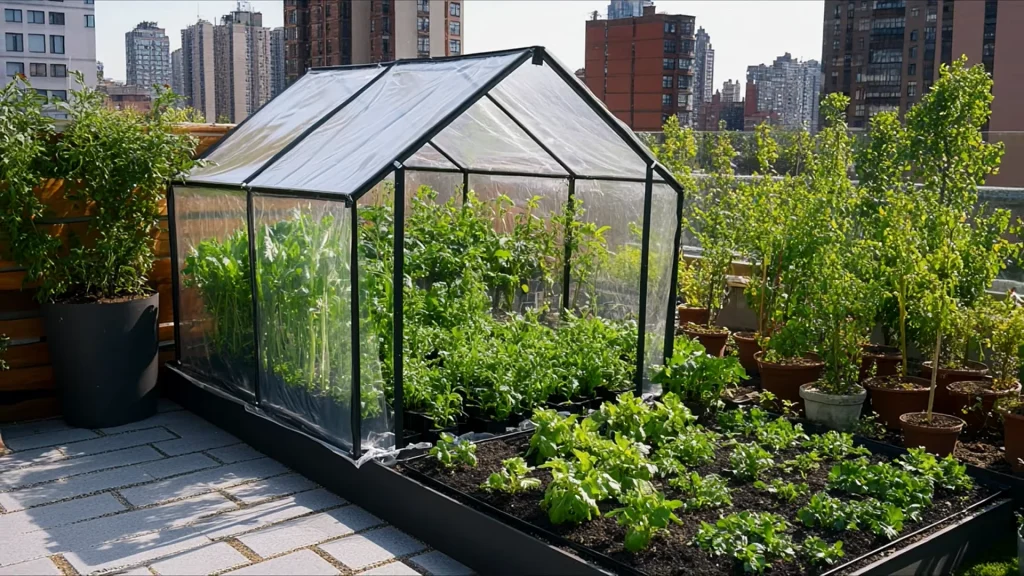
The largest expenditures are related to heating and lighting. When the days are shorter in autumn and late winter, solar-powered LED lamps can extend gardening hours into the evening without costing more. For early-season seed starting, grow lights are essential when natural daylight is not sufficient. Under seedling trays, heat mats accelerate germination in ways that are rarely possible with just ambient temperature. A small greenhouse can be transformed from an informal building into something that actually produces results during the winter by adding these layers of equipment.
Mini greenhouses are seldom the most effective for gardeners with the most expensive setups. A system rather than a collection of tools is what they have created. They carefully considered every tool they added, knowing what it does and why. These small, well-considered choices make a growing season feel earned or just survived: a copper tape barrier along the pots, a thermometer checked every day, a vent that opens automatically when needed.
Hydroponics Systems Are Growing Food Without Soil
A certain point, hydroponics ceases to sound theoretical and becomes genuinely weird. In a small grow room, such as a converted spare bedroom or a corner of a garage in suburban New Jersey, you see rows of lettuce growing in channels of flowing water with roots trailing below like pale threads. You begin to wonder what the soil was doing all along. It appears that the plants are in good health. In fact, it’s better than fine. There are dense, dark green, and healthy leaves. Mud is not visible. There was not a single insect to be found. Subterranean pumps and nutrients are the only sounds.
In its current form, the concept has quietly evolved for decades. It is still debated among agricultural scholars whether the Hanging Gardens of Babylon can be considered a distant ancestor of water-based agriculture. Since then, the trajectory has been inexplicable. NASA astronauts harvested red romaine lettuce from the International Space Station in 2015, the first edible food produced hydroponically in space. This experiment provides a strong argument against soil necessity.
Soil is completely eliminated in hydroponics. As a result, plants receive nutrients directly from water, without compost or soil to act as a middleman. Water use can be cut by up to 90% and yields can be increased by up to 30%, according to research from the University of Nevada. Those are impressive numbers. Moreover, how well the system is run has a significant impact on results. A poorly managed hydroponic system can fail faster and more thoroughly than a conventional garden bed.
| Category | Details |
|---|---|
| Topic | Hydroponics Systems |
| Definition | Soilless plant growing using nutrient-rich water |
| Key Types | Aeroponics, Wick, Water Culture, Ebb & Flow, Drip, NFT |
| Core Components | Reservoir, pump, nutrients, grow lights |
| Main Benefit | Faster growth, efficient water use |
| Typical Users | Home gardeners, urban farms, commercial growers |
| Skill Level | Beginner to advanced |
| Water Efficiency | Up to 90% less water than soil gardening |
| Growth Potential | 2x faster, higher yields in controlled setups |
| Reference Website | https://www.nasa.gov |
The variety of systems available is truly confusing for a novice. For beginners, deep water culture involves hanging roots directly into an oxygenated nutrient reservoir. Several items can be used, including a container, a pump, a net pot, and some growing medium. Even though there is very little room for error, a Mason jar can theoretically accomplish the task. Insufficient aeration causes roots to suffocate. An air pump’s consistency determines whether a DWC setup thrives or rots.
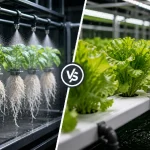
Aeroponics, where roots are suspended outdoors and misted with nutrient solution periodically, is a more complex method. In the chamber beneath the leaf canopy, the roots themselves hang white and clean, and a fine spray covers exposed root systems. It performs incredibly well when the conditions are right. The catch is fragility. In a matter of hours, irreversible damage can be caused by a missed misting cycle, a clogged nozzle, or a pump failure. Outside of strictly regulated environments, aeroponics’ viability is seriously questioned. This system might become more reliable as technology advances. At the moment, it requires a degree of care that many home gardeners overlook.
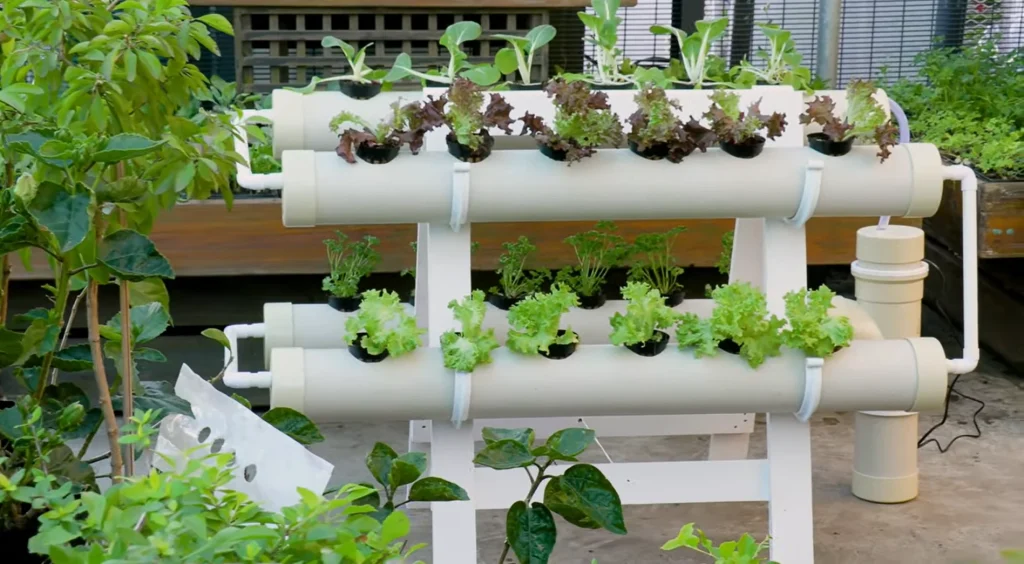
In commercial settings, the nutrient film technique occupies an intriguing middle ground. Through a sloped channel, a thin, continuous stream of nutrient solution travels across plants’ roots before draining back into the reservoir. Scalable and effective. Watching a commercial NFT setup in action gives the impression that this is what food production looks like when it’s carefully planned. A greenhouse floor is covered with long rows of gutters, and you can hear water flowing. Most hydroponic systems are vulnerable if the flow stops, because the plants have virtually no buffer. Water is the lifeline, which is completely mechanical.
If you’re not interested in complexity, the wick system is a good choice. Through capillary action, nutrient solution is drawn upward through absorbent material and reaches the roots without pumps or electricity. It works. Furthermore, it is ineffective for larger, thirstier plants and operates slowly and inconsistently. There is a subtle honesty to it; it’s passive and constrained, more appropriate for windowsill herbs than anything grandiose.
There is one thing these systems have in common: a change in definition of gardening. By removing soil, the grower-plant relationship is altered. The work becomes more analytical than detecting moisture or monitoring drainage. pH levels are measured every day. Nutrient concentrations vary according to plant stage. Temperature logs are reviewed every morning. It is less tactile than conventional gardening. Precision often comes at the expense of intuition. The worth of that trade will likely depend on the individual making it.
There has been an increase in urban interest in hydroponics over the past few years. There are now shipping container farms outside London, basements in Chicago, and rooftops in Brooklyn. In cities where land costs make conventional farming economically unfeasible, companies like AeroGarden have introduced small, reasonably priced countertop systems into everyday kitchens. Hydroponics indoors can grow without creating a separate environmental issue due to energy expenses. Electricity is used by LED grow lights. Pumps are always on. Recently, critics of large-scale indoor farming have become more vocal about the fact that improvements in water efficiency do not always translate into carbon savings.
It’s hard not to admire what the method does well, however. Even a tiny hydroponic setup can produce a full head of lettuce in half the time soil would take. It’s not gardening as we know it. It’s not supposed to be like this. It’s a much more organized, controlled, and useful alternative for those living in apartments and urban areas without outdoor spaces. Roots are not affected by soil absence. Plants appear to be unaffected.
Organic Gardening Plans and Tips That Actually Work
Standing in a garden that isn’t producing as it should can be frustrating. The plants are in the ground, the bed is watered, and the sun shines on it most of the day. However, there is a subtle problem. Curled leaves. Growth halts. It seems like pests appear out of nowhere. A gap between expectations and reality can occur quickly, especially for novice organic gardeners, and it can be more severe if you don’t use synthetic products as shortcuts. Organic gardening plans require a different approach. It’s not harder, exactly. Slower and more deliberate.
The first source of frustration is almost always sunlight. It may seem easy to place plants in a sunny spot, but standing in the backyard at various times of day reveals a more nuanced picture. At noon, a fence that appears innocuous casts a long shadow by mid-afternoon. In June, a nearby tree that appears thin in winter actually blocks sunlight. Planting tomatoes in slightly inadequate light will allow them to grow, but as they stretch awkwardly toward the strongest light, they will struggle more and produce less. Eight hours of direct sunlight is the standard recommendation for most fruiting vegetables; this is a number that should be counted rather than assumed.
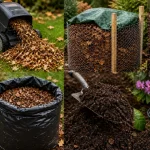
The soil is the key to organic gardening’s quiet success or costly failure. Beginners tend to focus on plants-what varieties to grow, how to arrange them, and when to start seeds. Most organic gardeners, however, agree that the soil is more important than anything planted in it. A good soil drains well between waterings without completely drying out, crumbles when squeezed instead of forming dense lumps, and smells sweet. To build that kind of soil, you need compost, well-rotted manure, and leaf mold. Two to three inches of compost should be added annually, according to most sources. The improvement is genuine, even though it is cumulative. It is rare for season one to appear as different as season three.
Most seasoned organic gardeners recommend starting smaller than feels comfortable, but very few novices do. There is a garden bed, seeds are cheap, and enthusiasm is high, so ambition makes sense. Weeds, however, do not care about enthusiasm. As they move quietly into bare soil, a large garden in May can quickly become unmanageable by July. In order to learn effectively, a space of fifty to one hundred square feet is sufficient. Furthermore, it enhances the realism of observation, one of the most helpful tools in organic gardening.
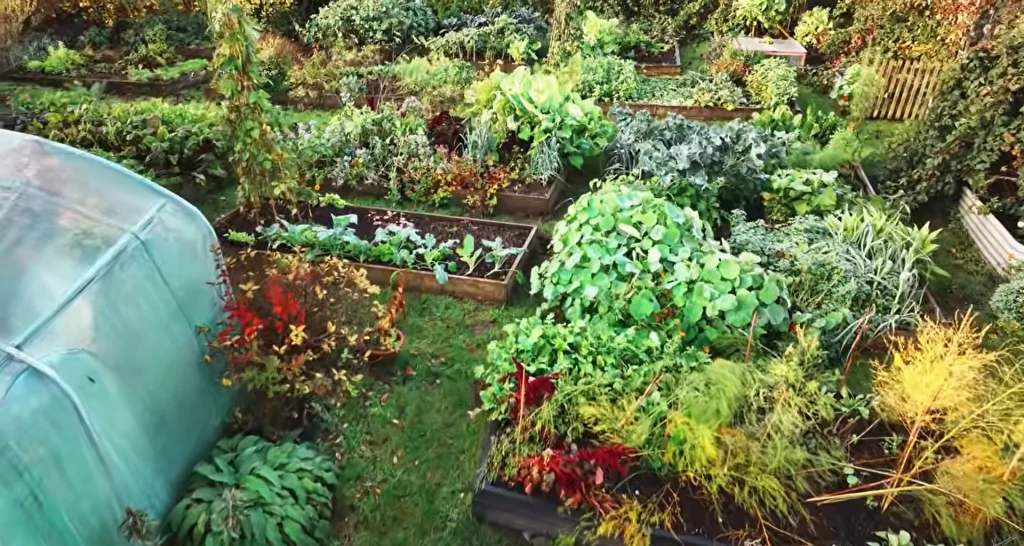
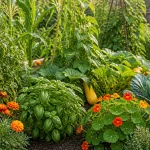
Companion planting is one of those concepts that seems fanciful until you see it in action. Basil planted near tomatoes seems to reduce whitefly pressure. Onions near carrots confuse the carrot root fly. Hoverflies and lacewings, whose larvae eat aphids, are attracted to marigold beds. A garden with more plant diversity tends to attract more beneficial insects, and more beneficial insects mean fewer pest problems. Results may vary, and this is not magic. The BBC Gardeners’ World Magazine has long supported this strategy, noting that natural predators establish and return to aphids or caterpillars when they find a reliable food source. Moving aside is part of the gardener’s job.
Crop rotation is probably more important than most newcomers realize, but it’s less exciting to discuss. Several pests and soil-borne illnesses can develop covertly when the same plant family is grown in the same soil patch year after year. This dynamic is particularly prevalent in nightshades such as tomatoes, peppers, and eggplants. Changing beds every year breaks the cycle without spraying or other intervention. Instead of producing a noticeable result in one season, it gradually produces healthier plants and fewer inexplicable failures.
As a result of watering, many organic gardens subtly deteriorate. If roots are watered lightly and frequently, they will remain near the surface, where they are more vulnerable during dry periods. Because it reaches deeper into the soil, where moisture stays longer, deeper, less frequent watering creates root systems that can endure missed days without collapsing. Watering plants early in the morning, rather than over their leaves, reduces moisture on foliage and subsequent fungal growth. It’s not hard at all. It does, however, require intentional attention to habits.
When you watch an organic garden grow over time, you get the impression that observation, rather than gardening in the traditional sense, is the most valuable skill. Observing which part of the bed dries out the fastest. Identifying the early, manageable stages of a weed infestation from its later, backbreaking stages. After spotting the first ladybug on an aphid colony, waiting before taking action. True competence comes from these minor decisions. No plan, no matter how thorough, can take them all into account beforehand. The garden instructs them season by season.